What is a Crypto Reorg? Chain Reorganization Explained
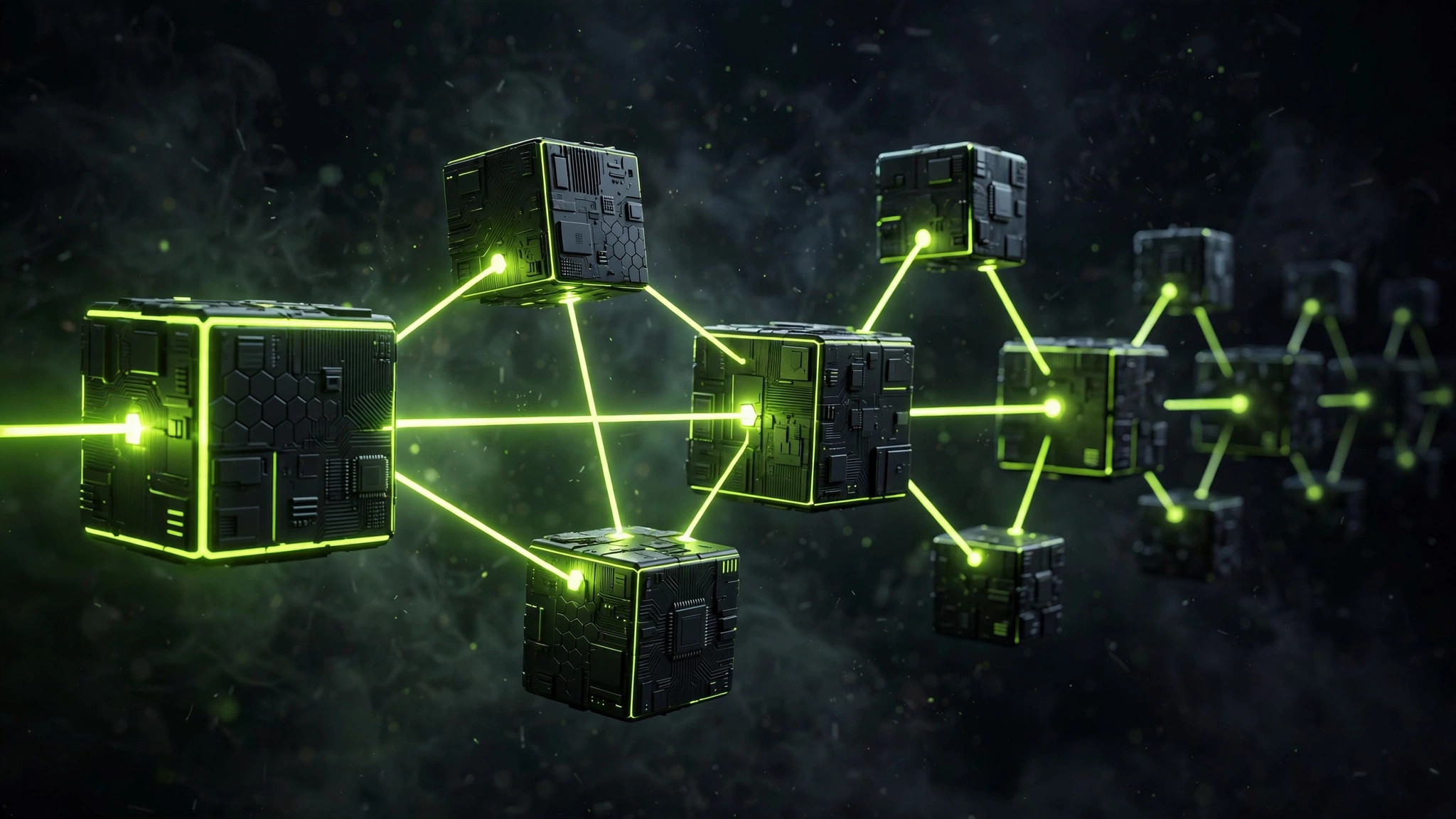
One of the first things beginners learn about blockchain is that it is immutable — once data is recorded, it can never be changed. Then they hear about something called a reorg, where the blockchain apparently rewrites its own recent history. Contradiction? Not quite. Reorgs are a normal, expected part of how decentralized networks reach agreement, and understanding them explains one of crypto's most practical concepts: *confirmations*.
This guide breaks down what chain reorganizations are, why they happen, and what they mean for your everyday transactions. No action is required from you in almost all cases — but knowing *why* will make you a calmer, more confident crypto user.
> Educational content only. This is not financial advice.
What Is a Chain Reorganization?
A blockchain grows as computers around the world (nodes, miners, validators) agree on the next block of transactions to append to the chain. Normally they agree instantly. But the network spans the globe, and information takes time to travel.
Occasionally, two participants produce a valid block at nearly the same instant, before either has heard about the other's. Half the network sees Block A first; the other half sees Block B first. The chain has temporarily forked into two competing versions of recent history.
The network resolves this with a beautifully simple rule: follow the longest chain (technically, the chain with the most accumulated work or stake behind it). Whichever branch gets extended first becomes the canonical history. The losing branch is abandoned, and any transactions that were *only* in the abandoned branch go back to the waiting pool (mempool) to be included in a future block.
That switch — from one version of recent history to another — is a chain reorganization, or reorg.
Why Do Reorgs Happen?
Two causes, one common and one rare:
1. Network latency (the common cause). This is just physics. Data cannot cross the planet instantly, so near-simultaneous blocks are inevitable. These natural reorgs are tiny — usually one block deep — and resolve within seconds without anyone noticing.
2. Deliberate attacks (rare, expensive). In theory, an attacker controlling enormous computing power or stake could secretly build a longer private chain and broadcast it to rewrite recent history — potentially to reverse their own payment (a "double spend"). On major networks, the cost of such an attack runs into staggering sums per hour, making it economically irrational in almost all scenarios. Smaller, less-secured networks have suffered such attacks historically, which is one reason security-conscious users prefer well-established chains.
Confirmations: Your Shield Against Reorgs
Here is where the concept becomes practical. When your transaction is included in a block, it has 1 confirmation. Each new block stacked on top adds another. Confirmations measure how deeply buried your transaction is — and therefore how absurdly expensive it would be to undo it via reorg.
- 1 confirmation: Fresh and relatively exposed. A tiny natural reorg could theoretically nudge it back to the mempool.
- 3 confirmations: Solid for most everyday purposes on major networks.
- 6+ confirmations: The classic Bitcoin standard. Reversing this much history is computationally infeasible.
- Dozens of confirmations: What exchanges often require for large deposits on various networks.
What Actually Happens to Your Transaction in a Reorg?
Let us make it concrete. You send crypto to a friend. It gets included in Block A. Then a reorg occurs: the network converges on a competing chain that does *not* contain Block A.
What happens to your money? Nothing bad. Your transaction was valid; it simply returns to the mempool and gets picked up by a subsequent block. Your friend's wallet may briefly show the incoming transfer, then hide it, then show it again — confusing, but not dangerous. No funds are created or destroyed; the ledger just took a moment to agree on ordering.
The genuinely dangerous scenario — a deep, malicious reorg enabling double-spends — is precisely what confirmation requirements are calibrated to prevent.
Shallow vs. Deep Reorgs
| Shallow reorg | Deep reorg | |
|---|---|---|
| Depth | 1–2 blocks | Many blocks |
| Cause | Natural latency | Almost always an attack |
| Frequency | Routine, constant | Extremely rare on major chains |
| User impact | None noticeable | Potentially serious; exchanges halt during these |
| Your response | None needed | Follow official exchange/wallet guidance |
What Should Beginners Actually Do?
Honestly: almost nothing. Reorgs are infrastructure-level events handled automatically by the protocol. Your only real responsibilities are habits you should have anyway:
- Wait for confirmations before treating a received payment as final — especially for large amounts or irreversible real-world exchanges (like handing over goods).
- Do not panic if a transaction briefly disappears and reappears. Check a block explorer; it will usually show exactly what happened.
- Prefer well-established networks for significant value, since their immense mining/staking power makes deep reorgs practically impossible.
- Keep records. If a transaction behaves oddly around the time of a known network event, save the transaction hash. In India, where every transfer can have 1% TDS implications, being able to show *what actually finalized on-chain* is valuable documentation.
Reorgs and the Meaning of "Immutable"
So is the blockchain immutable or not? Both, in a precise sense: the deeper a transaction is buried, the closer to absolutely immutable it becomes. The most recent block or two exists in a probabilistic twilight where the network is still finalizing agreement. Confirmations are simply the measure of how far out of that twilight your transaction has traveled.
Understanding reorgs gives you something most beginners lack: a correct mental model of *finality*. Crypto transactions are not instantly final like a cash handover, nor are they reversible like a credit card charge. They become final gradually, block by block — and now you know exactly why your wallet and exchange behave the way they do.
Continue with our free beginner track to explore how blocks, confirmations, and consensus fit together.
*Educational content only. This guide does not constitute financial advice.*
Keep Learning
If you found this guide useful, these related guides will help you go deeper:
Frequently asked questions
What is a crypto reorg?
A chain reorganization happens when two valid blocks are created nearly simultaneously, the network temporarily splits, and then converges on the longer chain — discarding the shorter branch. Transactions from the discarded branch return to the mempool.
Are reorgs dangerous for beginners?
Overwhelmingly, no. The vast majority of reorgs are one or two blocks deep and resolve automatically within seconds. This is exactly why exchanges and wallets wait for multiple confirmations before treating deposits as final.
Can I prevent a reorg from affecting my transaction?
You cannot control the network, but you can protect yourself by waiting for enough confirmations before considering a transaction settled. More confirmations mean exponentially more security against reorgs.
Related guides
- What Is Sharding? How Blockchains Split to Scale Faster — Sharding splits a blockchain into parallel pieces to handle more transactions. Learn how shards work, Ethereum's danksharding plan, and the key risks.
- What Is a Zero-Knowledge Proof? Privacy Tech Explained — Zero-knowledge proofs let you prove something is true without revealing the underlying data. A simple guide to this privacy tech for Indian crypto beginners.
- Proof of Work vs Proof of Stake: Consensus Explained — Proof of Work vs Proof of Stake decides who verifies your crypto. Compare mining and staking on energy, security and risk, in plain words for India.